
Low Ropes vs. High Ropes: Which Builds Trust (and When to Use Each)
When most people picture a ropes course, they imagine high climbs, big heights, and adrenaline. At Cielo Vista Team Challenge (CVTC), we do have high elements—but trust doesn’t start 30 feet up.
It starts on the ground.
This post will explain the difference between low ropes (low elements) and high ropes (high elements), how each builds trust in different ways, and why our most effective programs use both.
What Are Low Ropes (Low Elements)?
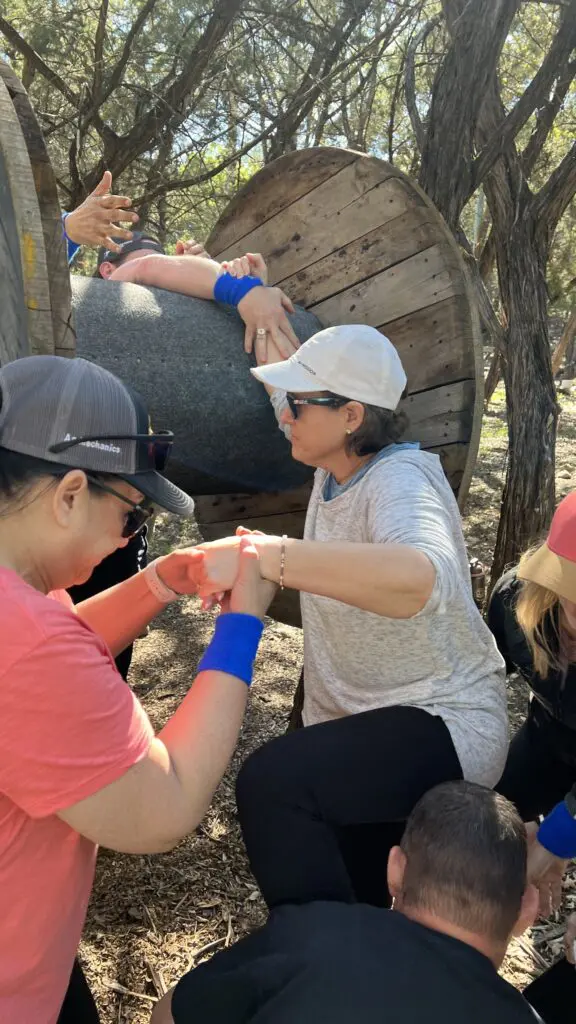
Low ropes are team challenges completed on the ground or just a few feet off it. No harnesses are needed.
Think:
- Balancing on cables close to the ground
- Problem-solving challenges with cinder blocks or boards
- Working together to climb a 14-foot wall
Low ropes are about process trust—learning how to communicate, listen, and carry out roles clearly.
What Are High Ropes (High Elements)?
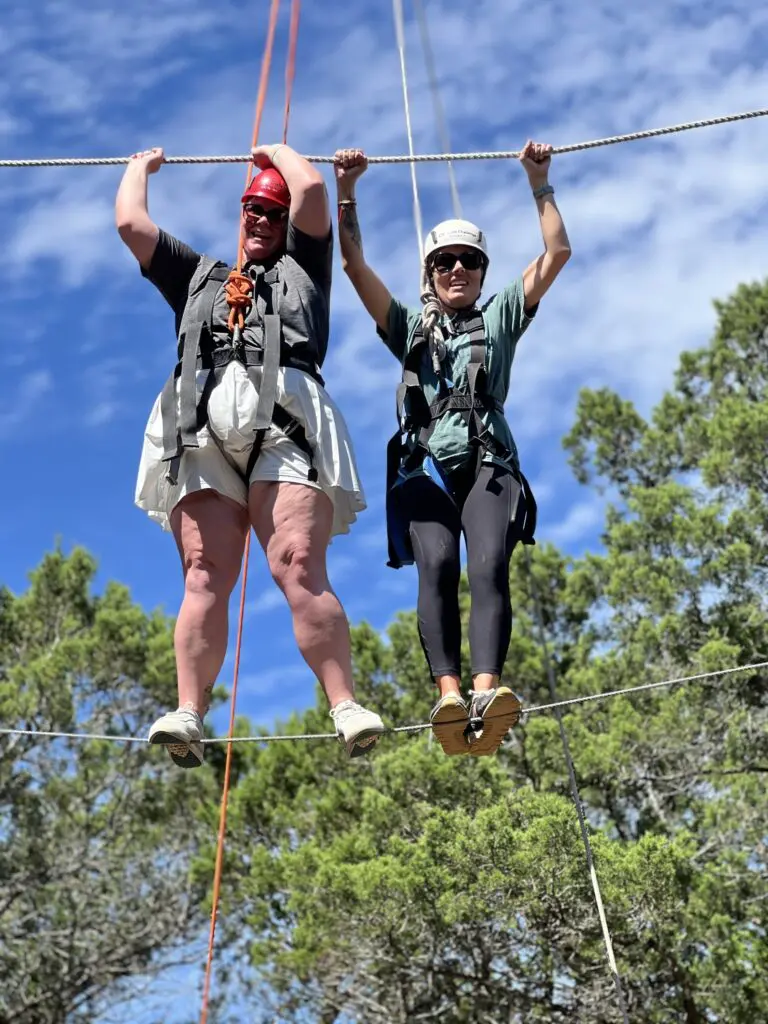
High ropes involve harnesses and belay teams, where climbers are supported by teammates holding their rope.
Climbers step out of their comfort zones, while belayers learn accountability and responsibility: “I’ve got you.”
High ropes are about interpersonal trust—knowing your team will support you when it matters.
The Two Kinds of Trust Your Team Needs
- Process Trust (Low Ropes):
- Do we work well together?
- Are our handoffs clean?
- Do we follow through on what we said we’d do?
- Interpersonal Trust (High Ropes):
- Do I feel safe with you?
- Will you hold the rope when I need you most?
- Can I be vulnerable here without judgment?
Challenge by Choice: Trust Without Pressure
At CVTC, no one is required to climb. Challenge by Choice means everyone contributes, whether as a climber, belayer, encourager, or coach. Each role is essential.
A Story from the Course
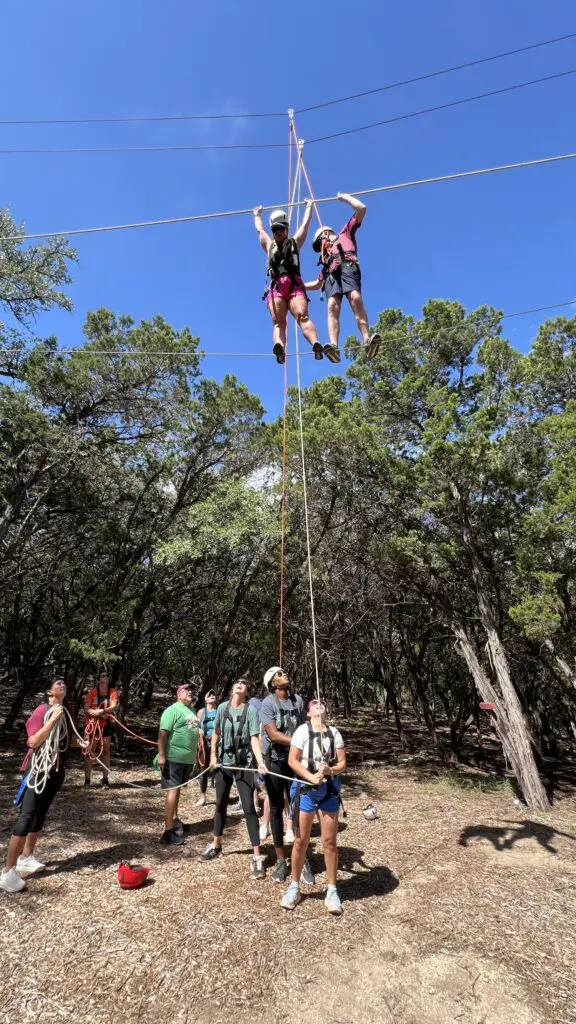
Recently, two climbers met in the middle of a cable and had to switch places. The climbers struggled at first, trying to figure it out on their own. Finally, they paused, listened, and let their belay team guide them step by step.
The trust wasn’t built 30 feet up—it was built on the ground, in the calm coaching and steady ropes of their teammates.
How It Transfers Back to Work
What teams learn on the course is what teams need in the office:
- Clear communication during handoffs
- Composure under pressure
- The confidence to ask for help
- Psychological safety to say, “Not today” without shame
Which Builds More Trust?
Both—just in different ways.
- Low ropes build process trust (how we work together).
- High ropes build interpersonal trust (how we care for each other).
Together, they create stronger, more connected teams.
Closing Thought
Trust isn’t built in a single leap—it’s built moment by moment, choice by choice. At CVTC, we design programs that combine low and high elements to meet your team where they are.
👉 Ready to build lasting trust with your team? Plan your custom program today.
